
The Hidden Danger of @Named in MapStruct: A Costly Production Bug
I recently ran into a subtle but critical issue while working with MapStruct in a Spring Boot application — one that broke production after deployment and took hours to debug.
Read engineering deep dives, architecture case studies, and insights from our team.
Exabyting Engineer
Exabyting Engineer
Exabyting Engineer
Exabyting Engineer
Exabyting Engineer
Exabyting Engineer
Exabyting Engineer
Exabyting Engineer
Senior Software Engineer
Exabyting Engineer
Exabyting Engineer
Exabyting Engineer
Exabyting Engineer
Exabyting Engineer
Exabyting Engineer
Exabyting Engineer
Exabyting Engineer
Exabyting Engineer
Senior Software Engineer
Exabyting Engineer
Found 10 blogs in tag #Java
I recently ran into a subtle but critical issue while working with MapStruct in a Spring Boot application — one that broke production after deployment and took hours to debug.
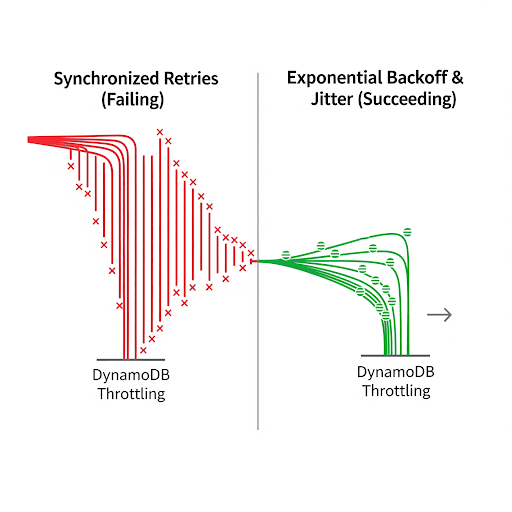
When working with DynamoDB, everything feels blazing fast—until you suddenly hit throttling.
0.If you’ve ever used Lombok’s @Builder annotation on your entity or DTO classes, you might have run into an unexpected issue: default values on fields don’t get applied when you build an object.
Java's memory structure is managed by the Java Virtual Machine (JVM) and is divided into different regions that help optimize performance and manage memory efficiently.
Java’s new virtual threads made it easier to build fast, scalable apps.
Imagine you're building a house.
The previous section discussed the Map interface with implementation classes, including internal mechanisms and use cases.
In the previous sections, we discussed the sub-interfaces of the Collection interface and their implementation classes, including the internal mechanisms and use cases.
In the previous part, we gave an overview of the Java Collection Framework, discussed the architecture, and discussed some of the implementation classes of the List interface and their internal…